
 Nederlands
 Español
 Русский
 Français
 Deutsch
 中文
中文

Overview
- Uncategorized
- What Are the Top 10 Highest Mountains in the World?
What Are the Top 10 Highest Mountains in the World?
Let’s be honest—there’s something about mountains that just pulls at you. Maybe it’s the sheer scale of them. Maybe it’s the fact that they’ve been standing there for millions of years, completely indifferent to everything happening at their feet. Or maybe it’s simpler than that—you just look up and wonder, how far does that actually go?
Whatever draws you in, you’re not alone. People have been obsessing over the world’s highest peaks for centuries—from the explorers who first mapped them to the climbers who’ve risked everything to stand on top of them. So if you’ve ever found yourself down a late-night rabbit hole Googling which mountain is tallest, which country has the most, or whether Kilimanjaro even makes the cut globally—you’ve come to the right place. Let’s dig in.
-
By Howling Tours
The 10 highest mountains in the world are all “eight-thousanders,” meaning they exceed an elevation of 8,000 meters (26,247 feet). All 10 are located in the Himalayan and Karakoram ranges of Central and South Asia.
The Top 10 Highest Mountains in the World
Before we get into the stories behind each peak, here’s the full ranked list you came for—the top 10 highest mountains in the world with countries, heights in both meters and feet, and the range each one belongs to.
| Rank | Mountain | Height (m) | Height (ft) | Country | Range |
|---|---|---|---|---|---|
| 1 | Mount Everest | 8,848.86 m | 29,031.7 ft | Nepal / China | Himalayas |
| 2 | K2 | 8,611 m | 28,251 ft | Pakistan / China | Karakoram |
| 3 | Kangchenjunga | 8,586 m | 28,169 ft | Nepal/India | Himalayas |
| 4 | Lhotse | 8,516 m | 27,940 ft | Nepal / China | Himalayas |
| 5 | Makalu | 8,485 m | 27,838 ft | Nepal / China | Himalayas |
| 6 | Cho Oyu | 8,188 m | 26,864 ft | Nepal / China | Himalayas |
| 7 | Dhaulagiri I | 8,167 m | 26,795 ft | Nepal | Himalayas |
| 8 | Manaslu | 8,163 m | 26,781 ft | Nepal | Himalayas |
| 9 | Nanga Parbat | 8,126 m | 26,660 ft | Pakistan | Himalayas |
| 10 | Annapurna I | 8,091 m | 26,545 ft | Nepal | Himalayas |
Spot a pattern? Nine of the top ten are in Nepal or shared with a neighboring country—and every single one of them sits within the Himalayan-Karakoram region of Asia. This part of the world is in a geological category all by itself. It was formed by the collision of the Indian and Eurasian tectonic plates—a slow-motion crash that’s been pushing rock upward for roughly 50 million years and, technically, is still going.
What Are the Top 10 Tallest Mountains in the World—In Detail?
Numbers on a table only tell half the story. Here’s what makes each of these peaks genuinely worth knowing about.
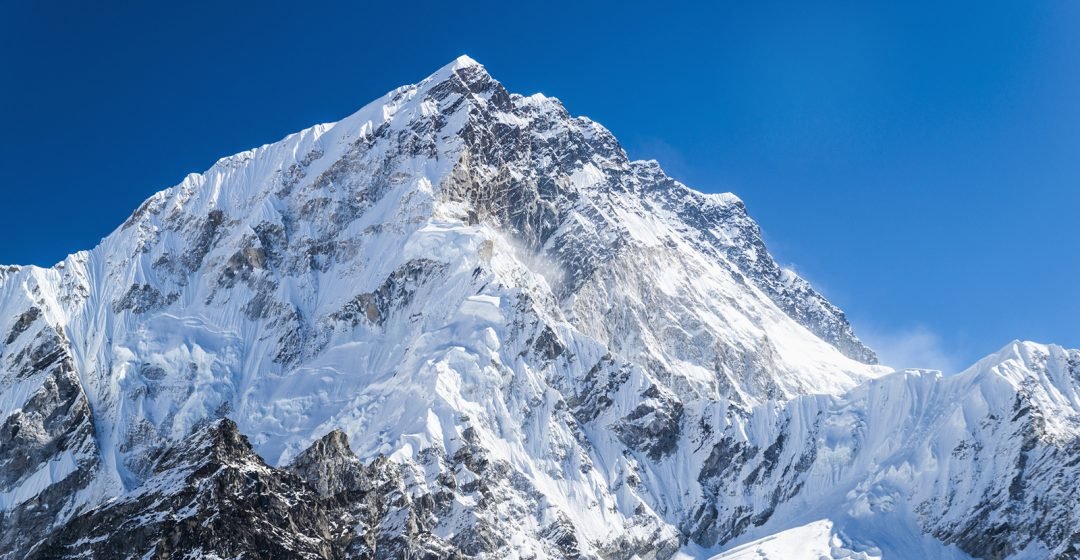
1. Mount Everest—8,848.86 m (29,031.7 ft) | Nepal & China
There’s really no way to talk about the world’s highest mountains without starting here. Everest is the roof of the world—full stop. It sits on the border between Nepal and Tibet along the Mahalangur Himal sub-range, and its official height of 8,848.86 meters was locked in by a joint Chinese-Nepali survey in 2020, nudging the old number of 8,848 meters slightly upward.
The first confirmed summit was May 29, 1953, when Sir Edmund Hillary from New Zealand and Tenzing Norgay, a Nepali Sherpa, made history together. More than 6,000 people have stood on that summit since—but the mountain has also claimed over 300 lives. It rewards the brave and punishes the careless, often at the same time.
2. K2—8,611 m (28,251 ft) | Pakistan & China
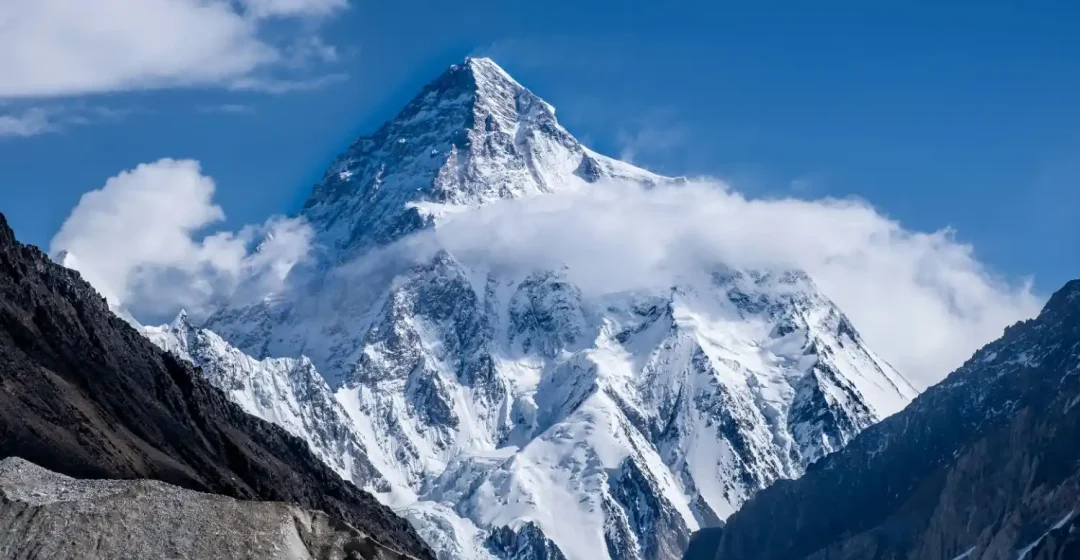
Here’s something that might surprise you—a lot of serious mountaineers would rather take on Everest than K2. The second highest mountain in the world is widely considered the harder and more dangerous climb of the two. It rises from the Karakoram range along the Pakistan-China border, and its name isn’t poetic at all—it was literally just the second peak catalogued during an early British survey of the Karakoram range.
K2 earned the nickname “the Savage Mountain” for good reason. Its fatality rate dwarfs Everest’s, and for a long time, a winter ascent was considered impossible. That changed in January 2021 when a Nepalese team finally pulled it off—one of the last truly unclimbed milestones in high-altitude mountaineering.
3. Kangchenjunga—8,586 m (28,169 ft) | Nepal & India
The third tallest mountain in the world straddles the border between Nepal and the Indian state of Sikkim. Its Tibetan name translates to “Five Treasures of Snow”—a nod to its five distinct peaks. What’s beautiful about Kangchenjunga is the tradition that’s grown around it: climbers who attempt the summit typically stop just a few steps short of the true top, out of respect for the local belief that the peak is sacred ground that shouldn’t be touched by human feet. That kind of humility feels rare and right.
4. Lhotse — 8,516 m (27,940 ft) | Nepal & China
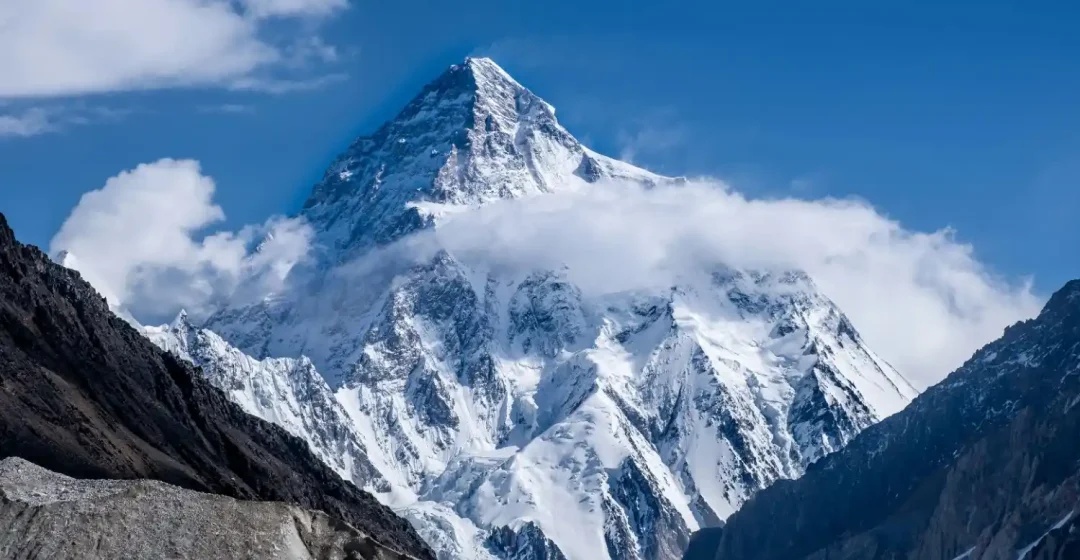
Lhotse is basically Everest’s next-door neighbor — the two peaks share the same base camp and follow the same route through the South Col in their upper sections. Despite being the fourth highest mountain in the world, Lhotse gets overshadowed by Everest almost constantly, which seems unfair. Its south face is regarded by many experts as one of the most formidable and technically demanding walls in all of world mountaineering. It deserves a lot more attention than it gets.
5. Makalu—8,485 m (27,838 ft) | Nepal & China
If you ever see a photograph of Makalu, you’ll understand immediately why climbers find it so captivating. It’s shaped almost like a perfect four-sided pyramid—razor-sharp ridges and steep and unforgiving faces rising in dramatic isolation about 19 kilometers southeast of Everest. That beauty comes with a price though; Makalu is consistently ranked among the most technically difficult of all the eight-thousanders. A French expedition first reached its summit in 1955.
6. Cho Oyu—8,188 m (26,864 ft) | Nepal & China
Cho Oyu often gets labeled the “easiest” eight-thousander—but let’s be clear about what that actually means. We’re still talking about a mountain pushing 8,200 meters above sea level, where the air is barely breathable and conditions can turn deadly in hours. What makes Cho Oyu relatively approachable is its western ridge, which doesn’t require the extreme technical skill that many of its neighbors demand. Because of this, it’s become a popular stepping stone for climbers building toward Everest. Its Tibetan name, “Turquoise Goddess,” feels like a much more generous description than the mountain probably deserves.
7. Dhaulagiri I—8,167 m (26,795 ft) | Nepal
Dhaulagiri has an interesting history that most people don’t know about. For a stretch of about 30 years—from 1808 to 1838—it was actually believed to be the highest mountain in the world. Then better surveys came along and knocked it down the rankings. Its Sanskrit name means “White Mountain,” which is about as honest a name as a mountain can have. A Swiss-Austrian expedition finally reached its summit in 1960.
8. Manaslu—8,163 m (26,781 ft) | Nepal
“Mountain of the Spirit”—that’s what Manaslu means in Sanskrit, and honestly, it earns the name. Set in the Mansiri Himal range of Nepal, Manaslu draws climbers and trekkers who are looking for something a little more raw and personal than the Everest corridor. The Manaslu Circuit trek is one of those experiences people talk about for the rest of their lives—dramatic mountain scenery, authentic Nepali villages, and a real sense of going somewhere that hasn’t been completely discovered yet.
9. Nanga Parbat—8,126 m (26,660 ft) | Pakistan
“Killer Mountain.” That’s not a nickname anyone handed out lightly. Nanga Parbat in Pakistan’s Gilgit-Baltistan region has one of the worst fatality records of any eight-thousander, and its sheer scale makes it immediately intimidating. The Rupal Face alone—rising 4,600 meters from its base—is the tallest mountain face anywhere on Earth. The name “Nanga Parbat” simply means “Naked Mountain” in Urdu and Sanskrit, referring to those exposed, bare rock walls that give it such a stark and sobering presence.
10. Annapurna I—8,091 m (26,545 ft) | Nepal
Annapurna I carries two distinctions that sound like they should belong to different mountains. First, it was the very first eight-thousander ever summited—French climbers Maurice Herzog and Louis Lachenal stood on top in 1950, three whole years before Everest. Second, it holds the highest fatality-to-summit ratio of all fourteen eight-thousanders, making it the statistically most dangerous mountain in the world to climb. The Annapurna Circuit that winds around it is one of the greatest trekking routes on the planet, so there’s beauty here alongside the danger—but the mountain never lets you forget who’s in charge.
What Are the Top 20 Highest Mountains in the World?
Once you move past the top ten, the list keeps delivering. Here are ranks 11 through 20 — still entirely in Asia, still breathtaking:
| Rank | Mountain | Height (m) | Country |
|---|---|---|---|
| 11 | Gasherbrum I | 8,080 m | Pakistan / China |
| 12 | Broad Peak | 8,051 m | Pakistan / China |
| 13 | Gasherbrum II | 8,035 m | Pakistan / China |
| 14 | Shishapangma | 8,027 m | China (Tibet) |
| 15 | Gyachung Kang | 7,952 m | Nepal / China |
| 16 | Gasherbrum III | 7,946 m | Pakistan / China |
| 17 | Annapurna II | 7,937 m | Nepal |
| 18 | Annapurna IV | 7,525 m | Nepal |
| 19 | Himalchuli | 7,893 m | Nepal |
| 20 | Distaghil Sar | 7,884 m | Pakistan |
Every single peak in the top 20 highest mountains in the world calls Asia home. Not one exception. You have to travel quite far down the global rankings before another continent even shows up.
What Are the Top 50 Highest Mountains in the World?
Here’s a fact that really puts things in perspective: every mountain in the top 50 highest in the world is located in Asia—spread across Nepal, China, Pakistan, and India. If you’re looking for the first peak from outside Asia, you won’t find it until roughly rank 189, where Aconcagua in Argentina finally shows up at 6,961 meters.
That’s not a small gap. That’s nearly 150 Asian peaks standing between the continent’s dominance and the rest of the world’s best efforts. The Himalayas and Karakoram don’t just lead the list—they own it entirely.
What Are the Big 7 Mountains? What Rank Is Kilimanjaro?
The Seven Summits challenge is exactly what it sounds like—climbing the highest peak on each of the seven continents. It’s one of the most coveted achievements in mountaineering, and here’s the full lineup:
| Continent | Mountain | Height | Country |
|---|---|---|---|
| Asia | Mount Everest | 8,848.86 m | Nepal / China |
| South America | Aconcagua | 6,961 m | Argentina |
| North America | Denali | 6,190 m | USA (Alaska) |
| Africa | Kilimanjaro | 5,895 m | Tanzania |
| Europe | Elbrus | 5,642 m | Russia |
| Antarctica | Vinson Massif | 4,892 m | Antarctica |
| Australia/Oceania | Puncak Jaya | 4,884 m | Indonesia |
Now — what rank is Kilimanjaro on the global list? If you’re measuring purely by height above sea level, it sits well outside the top 100. But here’s the thing: Kilimanjaro holds a title that no other mountain on Earth can claim. It’s the highest free-standing mountain in the world — meaning it doesn’t rely on a range or neighboring peaks for its height. It just rises, all on its own, from the flat plains of Tanzania to nearly 5,900 meters. Combine that with its place on the Seven Summits, and you’ve got one of the most iconic and most-climbed mountains on the planet, regardless of where the numbers put it on a ranked list.
7 Highest Mountains in the World
If you just want the top seven — Everest, K2, Kangchenjunga, Lhotse, Makalu, Cho Oyu, and Dhaulagiri I. Every single one clears 8,100 meters. Every single one sits in the Himalayan-Karakoram system. And every single one of them is genuinely life-threatening, even for the most seasoned, experienced climbers in the world. These aren’t mountains you stumble up. They demand everything you have.
What Is the Tallest Mountain in the World Underwater?
This one genuinely catches people off guard, so stay with me here.
If you measure a mountain from its base to its summit—rather than from sea level—then the tallest mountain in the world isn’t Everest. It’s Mauna Kea in Hawaii. Mauna Kea is a dormant shield volcano that starts at the floor of the Pacific Ocean, about 6,000 meters below the surface. Its peak sits 4,205 meters above sea level. Add those together and you get a total height of around 10,210 meters (33,500 feet) from base to top.
That’s roughly 1,400 meters taller than Everest by that measurement. Most of Mauna Kea is just quietly sitting underwater, which is why it never shows up on the standard rankings that use sea level as the baseline. And as a bonus—its summit hosts some of the most powerful astronomical observatories in the world, perched high above the clouds where the sky is clearer than almost anywhere else on Earth.
The World’s Tallest Mountain Ranges
It’s easy to get caught up in the individual peaks and forget the bigger picture. The mountain ranges that produced these giants are extraordinary in their own right.
The Himalayas run for about 2,400 kilometers across Nepal, India, Bhutan, China, and Pakistan. They’re home to all fourteen eight-thousanders and represent the most intense concentration of extreme altitude anywhere on the planet.
The Karakoram cuts through Pakistan, China, and India and contains K2 plus four other eight-thousanders. It has more peaks above 7,000 meters than any other range in the world—over sixty of them.
The Andes in South America stretch roughly 7,000 kilometers down the western coast of the continent, making them the longest mountain range on land anywhere on Earth. They can’t touch the Himalayas in height, but Aconcagua, at 6,961 meters, makes the Andes the highest range outside Asia by a comfortable margin.
The Rockies in North America and the Alps in Europe are the most familiar ranges to most Western readers—and both are genuinely spectacular—but their highest peaks, Denali at 6,190 m and Mont Blanc at 4,808 m, are considerably smaller than what Asia is working with.
The 14 Highest Mountains in the World—The Eight-Thousanders
For the mountaineering world, completing the Seven Summits is just the beginning. The real holy grail is climbing all 14 peaks above 8,000 meters—the “eight-thousanders.” It’s one of the rarest achievements in human history.
The full list covers the top ten we’ve already walked through, plus four more: Gasherbrum I (8,080 m), Broad Peak (8,051 m), Gasherbrum II (8,035 m), and Shishapangma (8,027 m)—all in the Pakistan-China or Tibet region.
To date, only a handful of people in history have climbed all 14. Italian legend Reinhold Messner was the first to complete the list back in 1986. South Korean climber Oh Eun-sun became the first woman to do it in 2010. The numbers are small for a reason—this is as hard as it gets.
Top 10 Mountains to Climb—From a Trekker’s Perspective
Raw altitude rankings are one thing. But if you’re actually thinking about lacing up your boots someday, here are ten mountains worth putting on your radar—covering everything from beginner-friendly treks to serious technical expeditions.
Mount Everest, Nepal/China—The dream. The ultimate. Requires years of high-altitude experience, serious fitness, and a budget that’ll make your eyes water. But nothing else compares.
Kilimanjaro, Tanzania—The most welcoming of the Seven Summits. No ropes, no crampons, no technical skills needed. Just solid fitness, good acclimatization, and the will to keep going when the altitude kicks in.
Aconcagua, Argentina—The highest peak outside Asia and a serious high-altitude undertaking, even without technical climbing. Your lungs will know about this one.
Denali, Alaska, USA—Cold. Brutal. Magnificent. North America’s highest peak is a full expedition-style climb with weather that changes fast and temperatures that go very, very low.
Mont Blanc, France/Italy—Europe’s second-highest peak and one of the most popular high-altitude climbs in the world. Accessible enough that many people complete it with relatively modest experience—though it still demands respect.
Mount Elbrus, Russia—The true highest peak in Europe and part of the Seven Summits. Guided ascents are widely available, making it one of the more achievable summits on the list.
Matterhorn, Switzerland/Italy—Not the tallest in the Alps, but possibly the most dramatic-looking mountain in the world. Solid technical skills are a must here.
Rainier, Washington, USA—A glaciated volcano in the Pacific Northwest that serves as one of the best training grounds for bigger Himalayan ambitions. Take it seriously.
Mount Kenya, Kenya—Africa’s second highest peak after Kilimanjaro, and a proper technical climb with wildlife-rich national park surroundings that make the whole experience feel special.
Island Peak (Imja Tse), Nepal—At 6,189 meters, this is one of the best first Himalayan climbs out there. Often paired with the Everest Base Camp trek, it gives you a real taste of high-altitude mountaineering without throwing you in at the deep end.
Discover the Top 15 Highest Mountains in the World—Conquer Giants
We’ve walked through all 14 eight-thousanders. So what’s number 15? That would be Gyachung Kang at 7,952 meters on the Nepal-China border—the highest peak in the world that falls just below that famous 8,000-meter mark. It’s a serious, beautiful mountain that rarely gets the attention it deserves, simply because it doesn’t quite clear that psychological threshold. In the mountaineering world, 8,000 meters carries enormous symbolic weight—and anything below it tends to get overlooked, even when “overlooked” means a mountain nearly 8 kilometers high.
Frequently Asked Questions
What are the top 10 tallest mountains in the world? Everest, K2, Kangchenjunga, Lhotse, Makalu, Cho Oyu, Dhaulagiri I, Manaslu, Nanga Parbat, and Annapurna I—in that order. All ten are located in the Himalayan-Karakoram region of Asia.
What are the top 20 highest mountains in the world? All 20 are in Asia. The top 14 all exceed 8,000 meters, while peaks 15 through 20 range between roughly 7,884 and 7,952 meters, spread across Nepal, Pakistan, and China.
What rank is Kilimanjaro globally? Outside the top 100 by sea-level height—but it’s the highest mountain in Africa, the highest free-standing mountain in the world, and one of the celebrated Seven Summits. The raw number doesn’t capture what it actually means.
What are the Big 7 mountains? The Seven Summits: Everest (Asia), Aconcagua (South America), Denali (North America), Kilimanjaro (Africa), Elbrus (Europe), Vinson Massif (Antarctica), and Puncak Jaya or Kosciuszko (Australia/Oceania, depending on which version of the list you use).
What is the tallest mountain in the world underwater? Mauna Kea in Hawaii. Measured from its oceanic base to its summit, it reaches about 10,210 meters total—roughly 1,400 meters taller than Everest by that measure. Only 4,205 meters of it sit above sea level.
What is the 2nd highest mountain in the world? K2, on the Pakistan/China border, at 8,611 meters.
What is the 3rd tallest mountain in the world? Kangchenjunga, on the Nepal/India border, at 8,586 meters.
What is the 6th highest mountain in the world? Cho Oyu, on the Nepal/China border, at 8,188 meters.
A Final Word
Here’s the thing about mountains—they don’t care about your timeline, your fitness level, or your plans. They’ve been standing there long before any of us arrived, and they’ll be standing there long after. But that’s exactly what makes them so compelling. There’s something genuinely humbling about looking up at a peak that touches the edge of the sky and knowing that people have stood on top of it—that with enough preparation, patience, and determination, it’s actually possible.
Whether you’re planning a trek to Kilimanjaro, dreaming of base camp at Everest, or just fascinated by how big this planet actually is—the mountains are waiting. And they’re a lot more patient than we are.