
 Nederlands
 Español
 Русский
 Français
 Deutsch
 中文
中文

Overview
- Uncategorized
- The Height of Kilimanjaro – Elevation Facts & Trek Guide
The Height of Mount Kilimanjaro
If you’ve ever dreamed of standing on the roof of Africa, you’ve probably found yourself Googling everything there is to know about this iconic mountain. And honestly, who could blame you? Mount Kilimanjaro isn’t just a mountain — it’s a bucket list experience, a personal challenge, and a natural wonder all rolled into one. Before you lace up your boots, though, let’s talk numbers. Because understanding the height of Kilimanjaro isn’t just trivia — it’s the kind of knowledge that could shape how you prepare, train, and ultimately succeed on your trek.
-
By Howling Tours
Attracting about 50,000 climbers every year, climbing Mount Kilimanjaro is a unique travel experience. Apart from its beautiful panoramic vistas and unique feeling of adventure, this mountain is the highest in Africa. Everyone who has climbed it can proudly say they have been to the “Roof of Africa.”
How High Is Mount Kilimanjaro?
Let’s get straight to it. Mount Kilimanjaro stands at 5,895 meters (19,341 feet) above sea level at its highest point, Uhuru Peak on the Kibo summit. In terms of Mount Kilimanjaro’s height in meters, that’s nearly six kilometers of pure vertical gain from the base of the mountain. And for those more comfortable with imperial units, the Mount Kilimanjaro height in feet clocks in at 19,341 feet—higher than any peak in both North America and Europe.
Now, you might be asking: which country does this giant belong to? Mount Kilimanjaro is in the country of Tanzania, located in East Africa. It sits near the town of Moshi in the Kilimanjaro Region, close to the Kenyan border, and it’s the centerpiece of Kilimanjaro National Park, a UNESCO World Heritage Site.
And as for which continent—Mount Kilimanjaro is in Africa, rising dramatically from the surrounding savanna plains in a way that genuinely takes your breath away (sometimes literally, thanks to the altitude).
Tallest Free-Standing Mountain in Africa
One of the most remarkable Mount Kilimanjaro facts is that it holds the title of the tallest free-standing mountain in the world. Unlike peaks in the Himalayas or the Andes that are part of massive mountain ranges, Kilimanjaro rises almost entirely on its own from a relatively flat plain. There are no neighboring giants to lean on—it simply erupts from the earth and keeps going up.
This volcanic origin is key to understanding the mountain’s three distinct peaks, each with its own character and altitude.
Highest Peak—Kibo
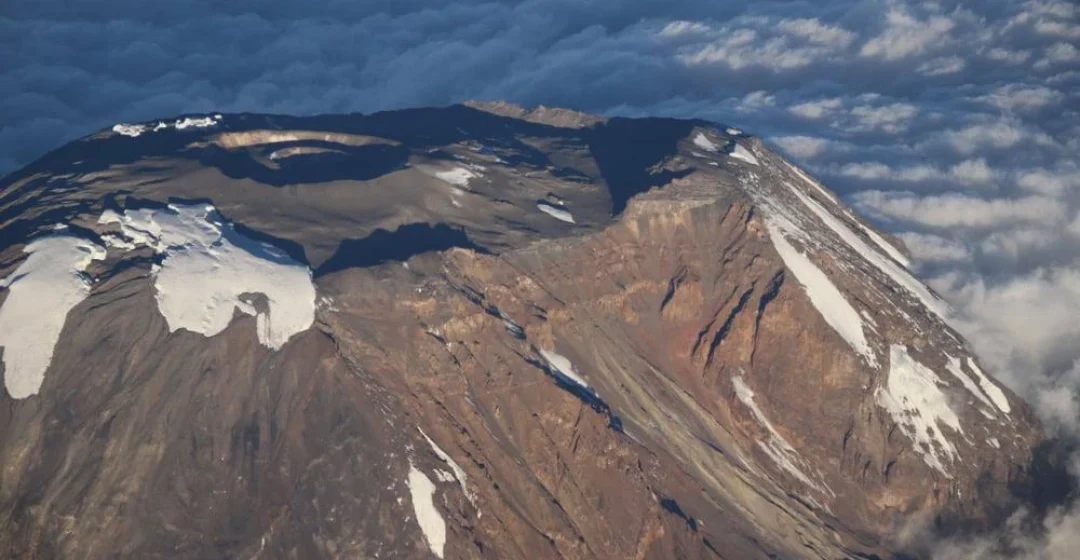
Kibo is the crown jewel of Kilimanjaro and the one that most trekkers are working toward. This is where Uhuru Peak sits at 5,895 meters (19,341 feet), and it’s the only one of the three peaks that remains potentially active. The crater atop Kibo is roughly 2.4 kilometers wide, and if you ever make it to the rim, the views are something you’ll carry with you for the rest of your life.
Kibo also holds the famous glacier fields and ice cap, though these have been retreating significantly over the past century due to climate change. Scientists estimate the glaciers could disappear entirely within decades—which makes climbing Kilimanjaro now feel even more urgent and meaningful.
Mawenzi Peak
Mawenzi is the second highest of the three peaks, standing at 5,149 meters (16,893 feet). It’s a jagged, dramatic-looking peak that’s visible from many points along the trekking routes and honestly looks like something out of a fantasy novel. Unlike Kibo, Mawenzi is non-volcanic and heavily eroded, which gives it that striking, rocky, spire-like appearance.
It’s worth noting that Mawenzi is considered a technical climb—you won’t be reaching its true summit on a standard Kilimanjaro trek. But just seeing it looming in the distance is an experience in itself.
Shira Peak
Shira is the oldest and lowest of the three volcanic centers, reaching about 3,962 meters (13,000 feet). Over time, the western side of Kilimanjaro collapsed inward, forming what’s now known as the Shira Plateau—a wide, open moorland landscape that several trekking routes cross through. It’s one of the more otherworldly parts of the mountain, where the vegetation thins out and the sky feels enormous.
Kilimanjaro Elevation Gain
Here’s where things get really interesting for trekkers. The total elevation gain on Kilimanjaro depends on which route you take, but you’re generally looking at a climb of around 4,000 to 4,800 meters from the trailhead to the summit. That’s a significant chunk of vertical distance accomplished over anywhere from five to nine days depending on your chosen route and pace.
The elevation gain isn’t just physically demanding—it’s the altitude that catches most people off guard. As you climb higher, the air becomes thinner, and your body has to work harder to get the oxygen it needs. Acclimatization is everything on Kilimanjaro, which is why longer routes like the Lemosho or Northern Circuit tend to have better summit success rates than shorter, steeper options.
Start Level
Most of Kilimanjaro’s main trailheads sit at an elevation of roughly 1,800 to 2,000 meters (about 6,000 feet) above sea level. The Marangu and Rongai routes begin at Marangu Gate and Rongai Gate, respectively, while Lemosho starts at Londorossi Gate. None of these start points are at sea level, so your body is already adjusting to altitude before you’ve taken your first proper uphill step.
This is actually helpful context when you’re planning your fitness preparation. You’re not starting from scratch—you’re entering a high-altitude environment from the very first moment, which means even the first day can feel more tiring than you expect if you’ve come from a low-elevation home city.
Which Mountain Is the Second Highest in Africa?
Great question, and one that often comes up in conversation around Kilimanjaro. The second highest mountain in Africa is Mount Kenya, standing at 5,199 meters (17,057 feet). Interestingly, Mount Kenya sits just across the border from Tanzania in neighboring Kenya — so the two tallest peaks on the continent are relatively close to each other geographically.
After Mount Kenya comes the Rwenzori Mountains in Uganda and Democratic Republic of Congo, with Margherita Peak reaching 5,109 meters (16,762 feet). Africa’s high peaks may not rival the Himalayas in raw height, but they come with their own unique challenges and rewards.
Is Kilimanjaro the Tallest Mountain in the World?
Short answer: no. Mount Everest in the Himalayas holds that title at 8,848.86 meters (29,031.7 feet) above sea level. Kilimanjaro doesn’t come close in terms of absolute height above sea level.
However, here’s an interesting way to look at it: if you measure from the base of the mountain rather than from sea level, Kilimanjaro’s rise of roughly 4,900 meters from its base to summit is actually comparable to — or even greater than — many Himalayan peaks measured the same way. It’s a mountain that commands respect on its own terms.
And unlike Everest, Kilimanjaro is accessible to non-technical climbers. You don’t need ropes, crampons, or specialized mountaineering skills to reach Uhuru Peak — just solid fitness, good preparation, and the determination to keep putting one foot in front of the other.
A Quick Word on Kilimanjaro’s Volcanic Nature
People sometimes ask: is Kilimanjaro evil? It’s an odd question, but it likely comes from curiosity about the mountain’s volcanic history. Kilimanjaro is a dormant stratovolcano — and when did Mount Kilimanjaro last erupt? The most recent significant volcanic activity dates back roughly 150,000 to 200,000 years ago, though some minor fumarolic activity has been recorded more recently in the crater area. There are no signs of an imminent eruption.
You may also have seen searches about a mount Kilimanjaro eruption in 2018 — but there was no eruption that year. That was likely misinformation or confusion with minor seismic activity or steam venting from the crater, which can happen with dormant volcanoes and is not cause for alarm. Kilimanjaro remains geologically quiet, and it’s considered safe to climb.
Want to Know More About Tanzania Adventures?
If the idea of climbing Kilimanjaro has you excited, wait until you discover everything else Tanzania has to offer. This is a country that genuinely rewrites your sense of what’s possible in a single trip.
Discover More Interesting Articles
Tanzania Safaris
Imagine waking up at dawn, stepping out of your tent, and watching a lion pad silently through the golden grass. Tanzania is home to some of the greatest wildlife spectacles on the planet. The Serengeti hosts the Great Migration — arguably the most breathtaking wildlife event in the world — while the Ngorongoro Crater offers a unique enclosed ecosystem where you can see the Big Five in one extraordinary day. A Tanzania safari pairs beautifully with a Kilimanjaro climb: summit the mountain first, then rest your legs on a game drive while the landscape unfolds around you.
Kilimanjaro and Other Mountains
Kilimanjaro might be the headline act, but Tanzania has other mountains worth exploring too. Mount Meru, the country’s second-highest peak at 4,566 meters, is often used as an acclimatization hike before Kilimanjaro and is a spectacular climb in its own right. The Usambara Mountains offer cooler temperatures, lush rainforest hiking, and local village walks that feel a world away from the crowds of the more famous peaks.